Fewer Dependencies, More Danger: The Counterintuitive Truth About Library Minimalism
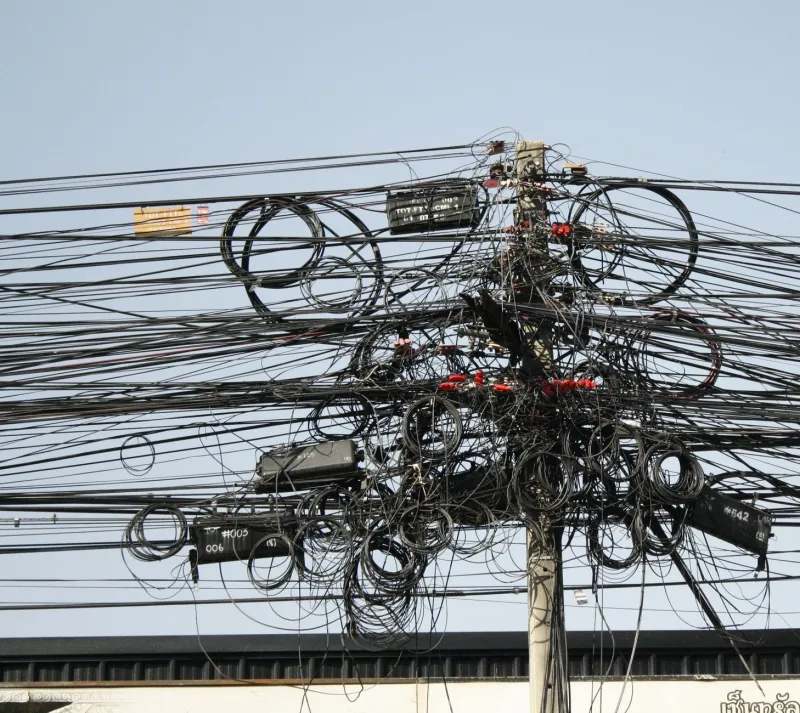
There is a particular brand of architectural confidence that arrives in the form of a pull request description: "Removed third-party library X. Replaced with custom implementation. No external dependencies." The team nods. The code review approves. And somewhere in the background, a slow-burning operational risk has just been introduced — quietly, with good intentions, and with no clear owner.
Dependency minimization has become something of an ideological position in certain engineering circles. The reasoning is not without merit. External packages introduce supply chain exposure, versioning friction, licensing obligations, and occasionally the kind of catastrophic single-point failures that make headlines. The left-pad incident of 2016 remains a touchstone for anyone who has argued that the JavaScript ecosystem's dependency culture had grown dangerously shallow-rooted. These concerns are legitimate.
But the argument breaks down when it becomes a blanket policy rather than a principled evaluation. Removing a dependency does not eliminate the problem it was solving. It transfers authorship of that solution to your team — a team that, in most cases, is not the one best positioned to solve it.
The Reinvention Trap
When a team eliminates a well-maintained library in favor of a custom implementation, they are making an implicit claim: that they can build and sustain a solution of equivalent quality with the resources available to them. That claim deserves scrutiny.
Consider date and time handling — a domain that appears straightforward until it is not. Libraries like date-fns or Temporal polyfills exist because the problem space is genuinely complex: leap years, timezone offsets, daylight saving transitions, locale-aware formatting, and edge cases that surface only in production. A team that replaces such a library with a homegrown utility will, in most cases, ship a version that handles the happy path reliably and fails in subtle, hard-to-reproduce ways when the calendar crosses a boundary no one thought to test.
This is the reinvention trap. The custom solution looks clean in the initial implementation. It looks less clean eighteen months later when a customer in Arizona reports that invoice dates are off by an hour every spring. It looks genuinely costly when the engineer who wrote it has moved on and no one else fully understands the edge-case logic embedded in the utility file.
NIH Syndrome as a Risk Multiplier
"Not Invented Here" syndrome — the cultural preference for building over adopting — is often framed as a pride issue. In practice, it is better understood as a risk multiplier. Every custom implementation your team writes is a system component that requires documentation, testing, maintenance, and eventual deprecation. The total cost of ownership for that component accrues to your team indefinitely.
Well-maintained open source libraries distribute that cost across a community. Security patches get applied by contributors with dedicated expertise. Edge cases get filed as issues and addressed by people who have encountered them in dozens of different production environments. The bus factor — the risk that a single person's departure cripples a component — is dramatically lower for a library with ten active maintainers than for a utility written by one engineer on a Friday afternoon.
This does not mean all external libraries are assets. Some are unmaintained. Some have security histories that should disqualify them from any serious evaluation. Some are so thinly adopted that your team would effectively become their primary maintainer anyway. The point is that the calculation is never as simple as "external equals risky, internal equals safe."
When Minimalism Is Genuinely Warranted
There are legitimate cases for reducing external dependencies, and they deserve acknowledgment.
A library that has not received a commit in three years, covers a narrow use case, and sits in a critical execution path represents a different risk profile than a dependency with an active maintainer community, a clear governance structure, and a published security disclosure policy. Treating these identically — either by keeping both or removing both — is not principled risk management.
Similarly, dependencies that introduce significant bundle weight for minimal functional value are worth questioning in frontend contexts where performance directly affects user experience and business outcomes. A 40kb library imported for a single utility function it provides is a reasonable target for replacement — not because external code is inherently dangerous, but because the cost-benefit ratio is genuinely unfavorable.
The distinction worth preserving is between removing a dependency because you have a principled reason to believe your team can own the solution more safely, versus removing it because the presence of the package feels philosophically uncomfortable.
Building an Evaluation Framework
Rather than defaulting to minimalism or permissiveness, web professionals benefit from a structured evaluation process that treats each dependency as a discrete architectural decision.
Maintenance health should be a primary criterion. How recently was the project last updated? Does it have a published changelog? Are security advisories addressed promptly? A dependency with strong maintenance signals is, in many respects, safer than an internal utility that no one has touched since the original author's departure.
Scope and replaceability matter considerably. A library that handles a narrow, well-defined function — input validation, UUID generation, cryptographic hashing — is easier to replace if circumstances require it than a framework-level dependency that has propagated assumptions throughout your codebase. Narrow dependencies can be isolated; pervasive ones cannot.
Ownership clarity is underappreciated. When a third-party library fails, who is responsible for the response? If the answer is unclear — if your team has not mapped out who monitors for upstream security disclosures or who owns version upgrade decisions — then the dependency is carrying hidden operational debt regardless of its quality.
The build-versus-adopt test should be applied honestly. Given the complexity of the problem, the time required to build an equivalent solution, and the ongoing maintenance commitment that solution would require, does building actually reduce your team's total risk? In most cases involving non-trivial problem domains, the answer is no.
The Strategic Posture
The goal of dependency management is not a minimal number of packages. It is a minimal amount of unmanaged risk. Those are different objectives, and conflating them is where many architectural decisions go wrong.
A codebase with fifteen carefully evaluated, actively maintained dependencies is almost certainly less risky than one with five custom implementations of the same functionality. The number on the dependency manifest is not the metric that matters. What matters is whether every external package in your system has a clear justification, a known maintenance posture, and an owner who monitors it.
Dependency hygiene — regular audits, documented rationale for inclusion, clear upgrade ownership — is the practice that actually reduces risk. Dependency minimalism, pursued as an end in itself, frequently just moves the risk somewhere harder to see.
The most dangerous line in a pull request description is not "added dependency X." It is "no external dependencies" — written without a corresponding plan for who will maintain what was just built, and for how long.